
19 Worshippers Including Children Rushed to Hospital After Carbon Monoxide Poisoning at Church Service—A Preventable Tragedy Born of Gross Negligence
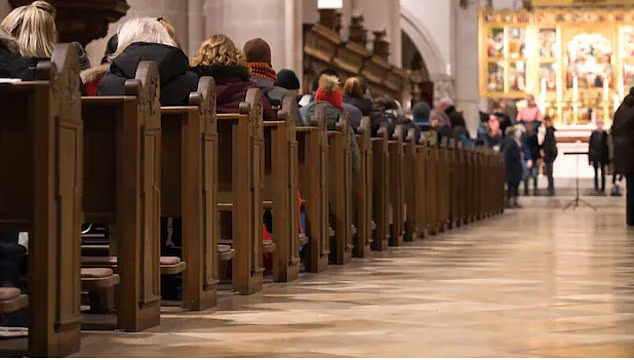
A routine Sunday service turned into a life-threatening catastrophe in Bavaria’s Allgäu region on November 23, 2026, when 19 people, including two children, were rushed to the hospital suffering from suspected carbon monoxide poisoning. The incident occurred at a castle chapel during a service hosted by the Priestly Fraternity of St Peter, leaving four victims in serious condition and sparking a massive emergency mobilization.
Kempten police confirmed the alarm was raised at approximately 10:50 a.m. after congregants began collapsing. The scene saw a desperate response from over 120 personnel, including paramedics, firefighters, and a rescue helicopter, while a Bavarian Red Cross spokesman, Sohrab Taheri-Sohi, noted that more than 50 people were ultimately affected by the toxic fumes. Authorities have identified the source as a faulty heating unit, recently purchased, which was activated at 6 a.m. by a 70-year-old church official to warm the building.
This incident is a textbook example of how a blind reliance on “safety mechanisms” can lull institutions into a state of lethal negligence. Investigators now admit that the heater’s automatic shut-off—the very feature intended to prevent such a tragedy—failed to trigger. It is frankly inexcusable that a device designed to detect lethal gas levels allowed a “very high concentration” of carbon monoxide to permeate a place of worship for nearly five hours before the congregation arrived, let alone before they began collapsing.
Whether this was a mechanical failure or an operational error is almost secondary to the reality that a house of worship became a gas chamber due to sheer technical oversight. We are told to trust the engineering of these safety systems, yet when they fail, it is the ordinary, unsuspecting citizen—including children—who pays the price. The irony of seeking solace in a chapel only to be poisoned by the very machinery meant to keep the environment comfortable should serve as a wake-up call. Regular maintenance and redundant safety checks are not suggestions; they are basic responsibilities that, in this instance, were clearly not managed with the level of scrutiny required to prevent a near-mass-fatality event.
The authorities are currently investigating the specific cause of the malfunction, but the investigation will do little to comfort the victims currently fighting for their lives in hospitals. When equipment is allowed to operate autonomously in public spaces without foolproof human oversight, the risk to the public is always higher than the official manuals claim. This wasn’t an “act of God”; it was a preventable failure of technology and oversight that turned a morning of faith into a scene of panic and trauma.
